TL;DR: Put a piece of cardboard behind your page. Use marker paper or 200+ GSM cardstock for alcohol markers. Don't press hard, don't scrub wet areas. That's 90% of the fix. The rest of this article is for the other 10% and for picking the right paper so you stop guessing.
I ruined a coloring page last month that I'd spent over an hour on. Ohuhu alcohol markers on some cardstock I grabbed from the printer tray without thinking. The sunset looked great on the front. Flipped it over? Purple-orange mess bleeding through the back, and it had soaked into the page underneath too. That page was a mandala I'd been saving.
So I went down a rabbit hole. Bought 14 different papers, lined them up on the kitchen table, tested every marker we had. Ohuhu alcohol set, Crayola Supertips, a Tombow pack, some cheap acrylics from Amazon. Made a mess. Learned a lot.
This is everything I figured out.
If markers are bleeding through right now
Stop and shove a piece of cardstock behind the page. Seriously, just grab any thick paper or cardboard and stick it between your current page and the next one. Even a cereal box panel works. This one move solves most bleed problems instantly.
If that's not enough, you're probably using alcohol markers on paper that's too thin. Switch to marker paper or print your coloring pages on heavier cardstock (single-sided). Use less ink: one pass, let it dry, then go again instead of scrubbing back and forth. And if all else fails, a finer tip deposits less ink per stroke, so swap from chisel to bullet.
Still bleeding? Honestly, some paper just can't handle markers. Switch to colored pencils or crayons for that particular book and save the markers for better paper.
Bleed-through vs ghosting vs feathering
People use these words interchangeably but they're different problems with different fixes, so it's worth knowing which one you actually have.
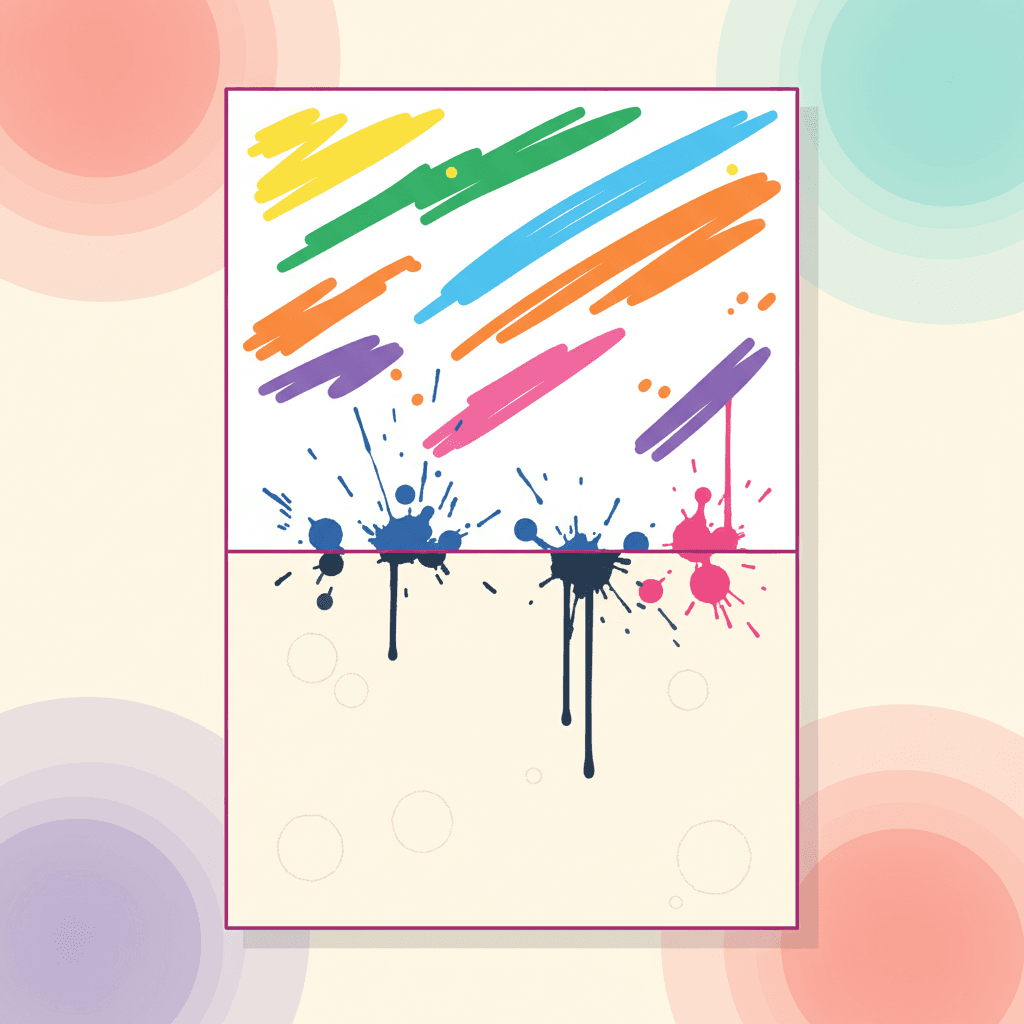
Bleed-through is when ink soaks completely through the paper and comes out the other side. You can feel it on the back. This is the bad one, the one that ruins the next page.
Ghosting (some people call it show-through) is when you can see color on the back of the page, but the surface is still dry. Hold the page up to a lamp and you'll see it, but touch the back and there's nothing wet there. Annoying in double-sided coloring books, but it doesn't wreck anything.
Feathering is a sideways problem. Your lines spread out and get fuzzy because the ink is wicking along the paper grain. Nothing to do with paper thickness. It's a texture issue.
Why this matters: a blotter sheet behind the page fixes bleed-through but does nothing for feathering. Heavier paper fixes ghosting but won't help if your real problem is feathering. You need smoother paper for that.
| Problem | What's happening | What fixes it |
|---|---|---|
| Bleed-through | Ink soaks fully through | Heavier paper, coating, barrier sheet |
| Ghosting | Paper is too see-through | Thicker or more opaque paper |
| Feathering | Ink spreads sideways in the grain | Smoother paper, less ink |
Why it happens
The ink itself
If you're using Copics, Ohuhu, Prismacolor Premier, Spectrum Noir, or Winsor & Newton ProMarkers, those are all alcohol-based. The alcohol acts as a solvent that rips through paper fibers way faster than water does. It drags the pigment down into the sheet as it evaporates off the surface. On regular printer paper? Forget it. It bleeds every time. I've never once gotten a clean back side with alcohol markers on 20 lb copy paper.
Permanent markers like Sharpies do the same thing. Their solvent punches right through.
Water-based markers (Crayola, Tombow Dual Brush Pens, most kids' markers) are much safer. The water moves slower through paper and doesn't dig as deep. If you're coloring in a thin-paper book and don't want to think about bleed, grab these.
Acrylic markers mostly sit on the surface. Bleed is rare with them. Paper warping is the bigger issue because the paint is wet.
The paper
Amy Shulke, a marker instructor with 35+ years of experience, puts it bluntly on her site Marker Novice: "Bad paper teaches bad habits." She's right. I spent weeks blaming my technique when the paper was the problem the whole time.
Here's the part that surprised me: two papers can be the same weight and behave totally differently with markers.
I had a 200 GSM mixed media paper that bled worse than a 75 GSM Winsor & Newton marker pad. Turns out it comes down to something called surface sizing, which is a chemical treatment applied during manufacturing. It controls how fast liquid soaks in. Marker papers have a lot of it. Cheap copy paper has almost none.
Coated papers have an actual physical layer on the surface (clay, wax, or polymer) that acts like a speed bump for ink. Some marker pads go further and sandwich a polymer barrier between paper plies that blocks ink entirely. Uncoated paper? The ink just soaks straight in, no resistance.
Texture matters too. Smooth paper gives you maybe 2 to 3 seconds of blending time with alcohol markers before the solvent evaporates. Rough paper? Under a second. Rough paper also tends to pill and fray when you drag a wet marker tip across it repeatedly.
How you're coloring
I used to press my markers down hard thinking it would give me richer color. Nope. All it does is force more ink through the fibers. Alcohol ink spreads on its own, you barely need to touch the surface. Going over a wet spot five or six times is another way to guarantee bleed, even on nice paper. I had to unlearn everything I knew from colored pencils.
Broad and chisel tips dump a lot of ink at once. Bullet and fine tips are more controlled.
Weather, weirdly enough
This one I didn't expect. We ran the same Ohuhu-on-Neenah test twice: once in January with the heat on (dry air), once on a sticky day in July. The July session bled noticeably more. Paper absorbs moisture from the air, so on a muggy day it's already slightly damp before your marker even touches it. The ink has nowhere to go but deeper. We saw the same thing indoors after boiling pasta in the kitchen, the humidity spike in the room was enough to make a difference.
Temperature matters a little too. Warm paper absorbs ink faster. Don't color next to a heater if you're using alcohol markers on thin paper.
And old markers that are running dry can be sneaky. They'll feel like they're almost out, then suddenly dump a blob of ink when you don't expect it. That's caused some of my worst bleed surprises.
What to do about it (by marker type)
Alcohol markers
The setup that actually works: real marker paper (not mixed media, not watercolor paper, not "premium" printer paper) plus a blotter sheet behind the page. That's it. That's the answer for 90% of alcohol marker bleed.
Some things I've picked up after months of using alcohol markers almost daily:
Barely touch the paper. I'm serious. If you're pressing at all, you're pressing too hard. The ink flows on its own and levels itself out.
Do one light pass, wait for it to dry fully, then come back for another layer. Trying to get full coverage in one wet go is how you flood the paper. Build up gradually.
When you're coloring near a printed black outline, stop a tiny bit short and let the ink wick to the edge by itself. Cleaner borders that way.
Brush tips are easier to control than chisel tips. I reach for chisel when I want to fill a big sky area fast, but for anything detailed, brush tip every time.
Go light to dark with your colors. Start with the palest shade and build up. Trying to lighten a dark area afterward is a losing battle.
Corners and tight spots: dab, don't drag. Quick light taps.
Colorless blender markers are useful for smoothing edges but they add more solvent to the paper, so don't go nuts with them.
If you're printing coloring pages specifically to use with alcohol markers, print on smooth cardstock at 200 GSM or heavier. Single-sided only. And check your printer can actually handle that weight before you buy a ream. More on that in our guide on how to print coloring pages.
For using alcohol markers in a cheap coloring book with thin paper? I've tried every workaround I can think of. Blotter sheets, lighter pressure, faster strokes, finer tips. And honestly, the results are always just okay at best. If the book paper is under 120 GSM, you're better off with colored pencils. Or scan the page you like and reprint it on good paper. Takes two minutes.
Water-based markers
Way less fussy. Go with 32 lb premium printer paper instead of the standard 20 lb stuff, use a blotter sheet if you're being cautious, and don't overwork areas. On 28 to 32 lb paper with normal pressure, most people won't have issues.
If your lines are fuzzy but the back of the page is clean, that's feathering, not bleed. Switch to smoother paper.
Acrylic markers
Bleed-through basically doesn't happen with these. The paint sits on the surface. If you're getting ghosting on really thin paper, a barrier sheet fixes it. The real annoyance with acrylics is paper warping when you lay down a lot of wet paint. Cardstock handles that better than thin paper.
What paper to buy
Quick rule: figure out what marker you're using first, then pick the paper, then check if your printer can handle it.
How paper weight relates to bleed
Heavier paper doesn't guarantee zero bleed (coating matters more), but it's a useful starting point for knowing what to expect. We keep this chart in our supply drawer:
| Weight | What it is | Alcohol marker bleed | Water-based marker bleed |
|---|---|---|---|
| 60–80 GSM | Standard copy paper | Bleeds almost always | Sometimes, with heavy strokes |
| 90–120 GSM | Premium copy paper, most coloring books | Bleeds often | Rarely, with a blotter |
| 130–160 GSM | Heavyweight paper, light cardstock | Sometimes, depends on coating | Almost never |
| 160–200 GSM | Cardstock, coated marker paper | Rare with a blotter | No |
| 200–250 GSM | Heavy cardstock, Bristol | Very rare | No |
| 250+ GSM | Thick Bristol, illustration board | No | No |
Specific papers that worked for us
After testing a bunch, here's where we landed:
For alcohol markers, X-Press It Blending Card at 250 GSM is the one. About $0.40 per sheet. I understand why every Copic tutorial recommends it now. Dead smooth, soaks up heavy saturation without a trace of bleed on the back, and the ink stays workable long enough to actually blend. It's the paper that made me stop fighting my markers and start enjoying them.
We also liked Strathmore 400 Bristol Smooth (250 GSM, about $0.70/sheet). A touch more texture than the X-Press It, which I actually preferred for big open areas like skies because the slight tooth grabs the color a bit. Comes in large sheets that you cut down yourself, so the per-page cost drops if you don't mind the scissors work.
Canson Illustration Manga (250 GSM, mid-range price) is another solid option. Smooth surface, no bleed complaints. Good for detailed coloring pages where you're working in small sections.
If you're on a budget, Neenah Exact Index 110 lb (about 200 GSM) is the cheapest paper we tested that actually controlled bleed well. It feeds through most home printers too, which is a plus. Blending isn't as smooth as on real marker paper, but if you're printing coloring pages at home and don't want to spend much, this is the one.
And for truly casual use: 32 lb premium printer paper (~120 GSM) with a blotter sheet behind it. Not bleed-proof by any stretch. But it's a real step up from standard 20 lb paper and costs almost nothing.
For water-based markers, you don't need to overthink it. 32 lb premium printer paper works fine at normal saturation. Any smooth cardstock in the 160 to 200 GSM range is basically bulletproof.
For blotter sheets, don't buy anything special. A piece of plain cardstock, some chipboard, or a cereal box panel all do the job. We've been using the same piece of chipboard from an Amazon package for weeks. It's got ink stains all over it but it still works.
What not to buy
Standard 20 lb copy paper with alcohol markers. Just don't. It bleeds every single time with no exceptions.
Mixed media paper sounds like it should work for everything, but it's mediocre at everything instead. Not smooth enough for marker blending, not textured enough for colored pencil grip, not absorbent enough for real watercolor. It's the "jack of all trades" paper and I stopped buying it.
Glossy photo paper is a disaster for markers. Ink pools on the shiny surface, takes forever to dry, smears if you breathe on it. The colors look weirdly oversaturated too, like a bad Instagram filter.
Newsprint and tissue paper: ink goes through instantly. Not even worth trying.
One more thing. Some budget marker pads slap "bleed-proof" on the cover but use a polymer coating that prevents the ink from absorbing at all. The ink just sits on top in wet blobs that won't dry. You can't blend, you can't layer, it beads up like rain on a car hood. If a marker pad feels weirdly plasticky when you touch it, that's what's going on.
Strathmore actually addresses this on their blog: "If the sheet were bleed proof, there would be nowhere for the ink to go, causing it to pool on the surface." Their marker paper is "intentionally not completely bleed-proof" because the ink needs somewhere to sink into so you can blend it. That clicked for me. You want paper that absorbs ink in a controlled way, not paper that blocks it entirely.
Blotter sheets
A scrap of cardboard behind your page. That's the whole technique. But since I get asked about the details:
Slide it behind whatever page you're coloring. In a bound book, tuck it between the current page and the next one. Check it every few minutes because if ink soaks through and pools on the blotter, it can wick back up into the next page (yes, that happened to me). When the blotter gets too saturated, flip it over or grab a new one.
Good blotter materials: cardstock, chipboard, or just 3 or 4 sheets of scrap paper stacked together. A clipboard under the page works too, though the ink will pool on the surface since plastic doesn't absorb.
Don't use glossy magazine pages as a blotter. The ink bounces right back and transfers to your work. Found that out with a Vogue insert and a half-finished butterfly. Also skip facial tissues (they stick to wet ink and leave little fibers everywhere) and paper towels (too bumpy, you can feel the texture through the page while you're coloring).
Printing coloring pages? Your printer type matters
I printed a stack of mandalas on our inkjet, sat down with my Ohuhu markers, and watched the printed black outlines turn into gray smudges. The alcohol in the markers was reactivating the inkjet ink.
Turns out laser printers are much better for this. Laser toner gets heat-fused onto the paper surface, so it doesn't dissolve when alcohol hits it. The lines stay crisp. The only quirk is that on certain coated marker papers, the toner can rub off if you scratch at it. Worth testing with one page before you print 50.
If you have an inkjet printer and want to use alcohol markers, let the prints sit for at least a full day before coloring. The ink needs time to fully cure. You can speed it up with a blow dryer on low heat. But always test a corner with your marker before you commit to the page.
For feeding heavy paper through your printer: most home printers top out around 200 GSM through the regular tray. For heavier stuff, use the rear feed or manual feed slot if your printer has one (the paper path is straighter so it jams less). Feed one sheet at a time. And change the paper type setting to "cardstock" or "thick paper" so the printer adjusts its rollers. If a sheet is catching, stop. Don't force it through. We have more detail on this in best paper for printing coloring pages.
Buying coloring books for marker use
I pulled out five coloring books from our shelf and checked the paper in each one. The thinnest felt like regular copy paper, maybe 70 GSM. The nicest was around 120 GSM. None of them listed the paper weight anywhere on the cover, which is frustrating. Publishers go thin because it's cheaper to print and ship, but it means most off-the-shelf coloring books aren't built for markers at all.
If you specifically want to use markers in a coloring book, look for one that mentions its paper weight on the cover or in the product listing. You want at least 120 GSM for water-based markers, 160 GSM or above for alcohol. Single-sided printing is a big deal too, because if there's a design on the back of every page, you can't use a blotter sheet without blocking it. Perforated pages are a bonus since you can tear out individual sheets and lay them flat.
If you already own a thin-paper book and love the designs, don't color in it with markers. Scan or photograph the page, reprint it on better paper, and use the book as a design catalog. Two minutes of effort, way less frustration.
Rescuing pages after bleed
If bleed already got onto the next page, let it dry fully first. Don't touch it while it's wet or you'll smear it. Once it's dry, you can lean into it: fill that page with dark colors (navy, black, deep purple) so the stain becomes part of the palette. Or print a replacement page and glue it over the damage. If the stain is light enough, opaque markers or paint pens can sometimes cover it.
If two pages got stuck together while the ink was wet, separate them right now before they bond permanently. Slide clean scrap paper between them and press the book flat under something heavy until everything dries.
For single-sided coloring pages, bleed on the back doesn't matter at all. Nobody sees it.
Find your combo (5-minute test)
Before you start a coloring page you actually care about, grab a corner of the same paper (or a scrap piece) and do a quick test swatch:
- One light pass with your marker.
- Let it dry. Second pass.
- Third pass while it's still a little wet (worst-case scenario).
- Flip it over. Any bleed?
Once you find a paper and marker combo that works, write it down. I keep notes on the inside cover of each coloring book. "Ohuhu brush tip on Neenah 110lb with chipboard blotter = no bleed." Saves me from the guessing game every time I sit down.
Watch: preventing marker bleed-through
More on markers and paper:
Further reading
- Best marker paper: reviews and testing (Marker Novice)
- Tips for using alcohol markers in coloring books (Art is Fun)
- Paper types explained (Pen Boutique)
- Feather vs bleed on paper (Strathmore)
- Preventing bleed-through with alcohol markers (Cecile Yadro)
FAQ
Do all alcohol markers bleed through paper?
On regular printer paper, yes. Pretty much without exception. On proper marker paper or good cardstock (200+ GSM) with a blotter sheet, you can get it down to zero bleed. The paper is doing most of the work there, not the marker.
Why does it bleed even on thick paper?
Because thick doesn't mean treated. I have a 200 GSM mixed media paper that bleeds worse than a 75 GSM marker pad, because the marker pad has surface sizing and the mixed media paper doesn't. Weight is only part of the equation. And if you're going over the same spot multiple times while it's still wet, you can overwhelm any paper.
Are Copics worse for bleeding than Ohuhu?
Nah, they're all alcohol-based and behave about the same. Copics might have slightly more controlled ink flow, but I've had both bleed identically on the same paper. Switch the paper, not the marker.
Can I use alcohol markers in a coloring book?
Technically yes. Realistically, you'll be fighting the paper the whole time. Blotter sheet behind the page, every time, no exceptions. Tear the page out if it's perforated. And still expect some ghosting on standard coloring book paper. If you want results you'll actually want to frame, reprint the design on heavy paper.
What's the cheapest way to stop bleed?
Cardboard behind the page (free from any box in your recycling) and lighter pressure. Total cost: nothing. Those two changes are enough for most casual coloring sessions.
Does humidity affect bleed?
More than I expected. We tested the same combo in a dry room and in the kitchen right after making soup, and the humid room gave noticeably more spread. Paper absorbs moisture from the air, so on a muggy summer day it's already damp before you touch it with a marker. Slightly heavier paper during sticky months helps.
Will a plastic sheet under my page work as a blotter?
It'll protect the surface underneath, but ink pools on plastic instead of absorbing. When you lift the page, that pooled ink can transfer back up. I've had this happen with a cutting mat. Cardboard or cardstock works better because it actually soaks up the excess.
Marker paper vs Bristol paper: what's the difference?
Marker paper is thinner (usually 75 to 150 GSM) but has a coating or polymer layer designed specifically to stop alcohol ink from soaking through. Bristol is just thick, smooth drawing paper (200 to 300+ GSM) that fights bleed with brute mass. Both get the job done. Marker paper is built for the job; Bristol just happens to be heavy enough that it works.
How can I tell if paper is coated?
Drag your fingertip across it. Coated paper feels slippery-smooth, almost waxy. The dead giveaway: put a tiny drop of water on it. If the water beads up and sits there, it's coated. If it soaks in within a second or two, it's uncoated. Most regular printer paper is uncoated.
Can I fix feathering?
That's mostly a paper issue, not a technique one. Smoother paper is the main fix. Beyond that: less ink (lighter pressure, fewer passes) and working faster so the solvent doesn't have time to wick sideways. Finer tips also help since they put down less ink per stroke.
Need to get your print settings right first? See How to print coloring pages. Looking for the right paper? See Best paper for printing coloring pages. Or browse coloring pages to find something to color.