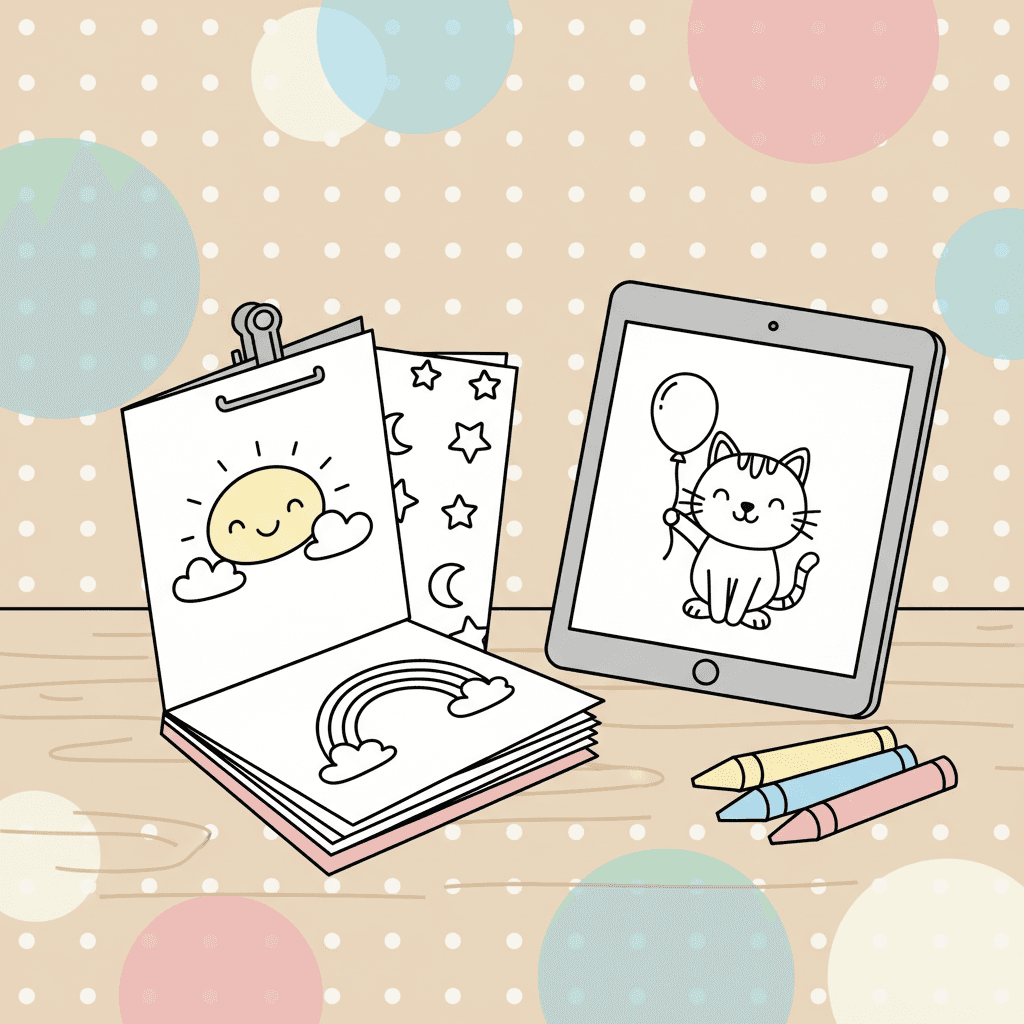
Coloring can be calming because it gives hands a job and the brain a simple goal. But it is not magic, and it is not a replacement for help when a kid needs it.
Use this guide to set expectations that keep coloring helpful.
When coloring helps most
Coloring tends to help in moments that are "almost calm" but not calm yet. It is less helpful in full meltdown moments.
Good moments to use coloring:
- right after school when kids need a reset
- during indoor recess when energy is high
- after a busy social event
- as a short transition before dinner
If the problem is hunger, exhaustion, or needing movement, fix that first. Then use coloring as the quiet follow-up.
What coloring can do
In many families and classrooms, coloring can help kids:
- settle after a busy moment
- focus for a short, manageable block of time
- finish something and feel proud
Coloring works best when the page is not too hard.
Start with themes kids recognize:
If your child quits fast, page difficulty is often the reason. This guide helps you choose pages that match the age:
What coloring cannot replace
Coloring cannot replace:
- sleep
- food
- movement
- connection with a trusted adult
If your kid is melting down because they are hungry or exhausted, no activity will "fix" that.
Set up a calm-down session in two minutes
Use a short routine:
- pick one page together
- pick one starting color
- set a timer for 6 to 10 minutes
Say one clear rule:
"Color until the timer beeps; then we save and stop."
Predictable starts and stops reduce power struggles.
Make the page choice support calm
Some pages energize. Some pages settle.
For calm sessions, favor:
- simple subjects with open space
- fewer tiny regions
- themes that feel cozy or familiar
These categories often work well:
If a kid asks for something intense (dinosaurs, monsters, space battles), you can keep the theme and choose a calmer page inside it.
Use prompts that lower pressure
Perfection pressure breaks calm.
Try prompts that keep it light:
- "Fill the biggest shapes first."
- "Use only cool colors."
- "Make the background one color family."
If a kid feels stuck, offer one choice, not a lecture: "Sky or ground first?"
Use a calm script that does not sound fake
Adults often talk too much when trying to calm a kid. A short script works better.
Try this:
- "We are doing one page."
- "We are doing one timer."
- "We are saving at the beep."
Then stop talking. Silence is part of calm.
Watch for the early warning signs
Coloring stops helping when:
- the page is too detailed
- the kid gets stuck choosing colors
- the activity turns competitive
When you see that, shorten the session and pick a simpler page next time.
What to do when frustration shows up
Frustration is a signal to change the setup, not push harder.
Try this reset:
- pause and take one slow breath together
- switch to a bigger region (background or main shape)
- set a shorter timer for the rest of the session
If a kid is stuck on "wrong colors," use a smaller palette:
- pick three colors
- repeat them across the page
The goal is a calm finish, not a perfect page.
Digital vs printable for calm sessions
Both can work. Pick the one that reduces friction for your situation.
Digital is useful when:
- you need a clean activity with no supplies
- your kid benefits from undo
- you want to save and finish later
Printable is useful when:
- screens make it harder to settle today
- you want fewer settings and buttons
- you need multiple kids coloring at once
If you want a fast decision guide:
A fast calm pick for hard days
When the day is already intense, pick the calmest theme you have.
Then set a short timer and stop on purpose.
A quick safety note
If your kid has ongoing anxiety, attention issues, or big emotional swings, talk to a qualified professional who knows your child. Coloring can be one supportive tool, but it should not be the only plan.
A simple calm plan you can repeat
If you want something you can do daily, repeatability matters more than variety.
This routine is a good baseline:
Try a calm 6-minute reset today
Pick a simple page, set a 6-minute timer, and use one low-pressure prompt. If the session ends smoothly, repeat the same routine tomorrow.