Some kids love coloring. Some kids need a reason to start.
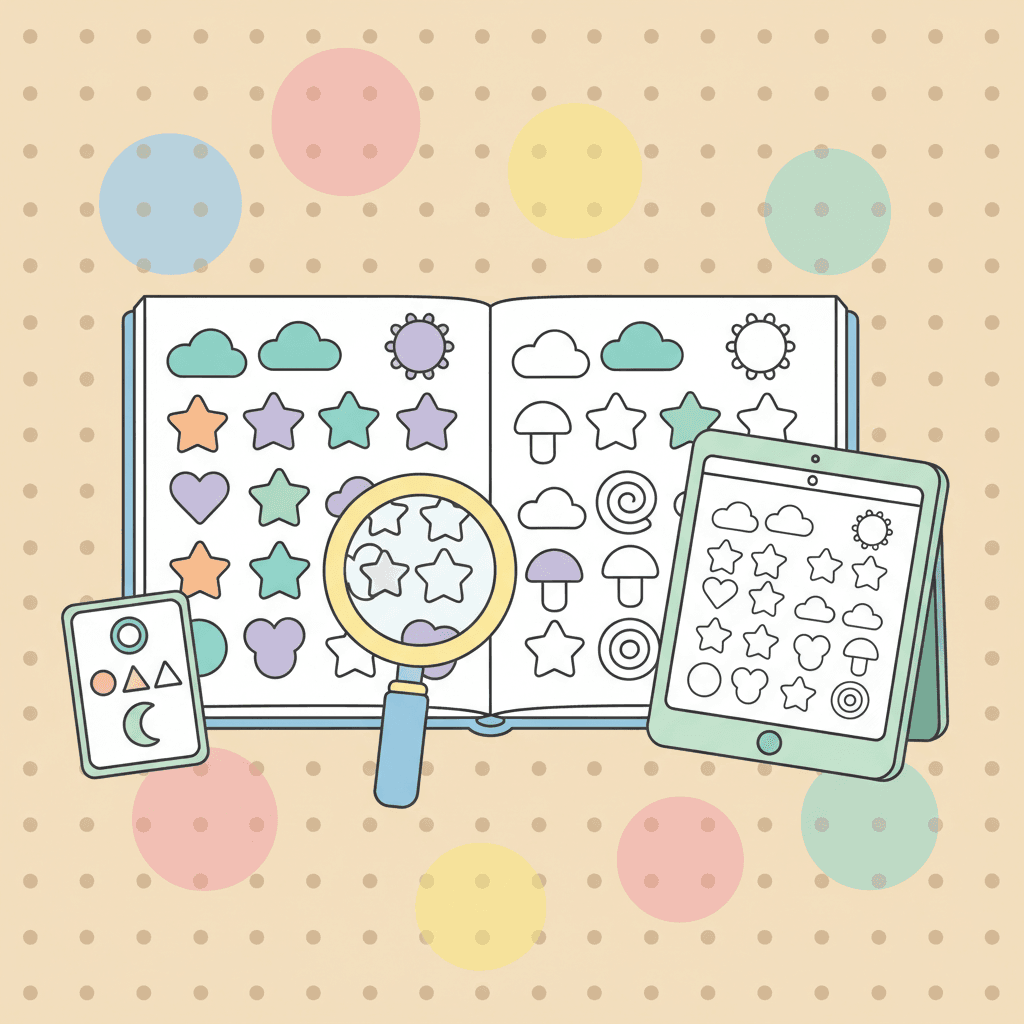
A simple "find and color" prompt gives the session a job. It also helps kids focus on details without turning the activity into a lesson.
This is not a reading program. It is a light game you can use at home or in a classroom center.
What "find and color" means
You pick a page. Then you give one short prompt:
- "Find the stars and color them yellow."
Kids scan the page, find the target, and color it. That is it.
This works well because:
- the goal is clear
- the page feels like a scavenger hunt
- stopping is easy because the task has an endpoint
Choose the right pages for this game
You want pages with repeated objects. One giant character page can work, but repeated objects make the game easier.
Good categories to start with:
- City (signs, windows, vehicles)
- Space (stars, planets, rockets)
- Holidays (trees, ornaments, candy canes)
- Ocean (fish, shells, bubbles)
If you want a guide for picking age-friendly pages:
The basic format (one prompt at a time)
Keep prompts short. One prompt at a time keeps it calm.
Try this flow:
- give one prompt
- kid colors the target
- give the next prompt
If you say six prompts at once, kids forget the list and get frustrated.
Easy prompt ideas (ages 4 to 6)
Use simple words and obvious shapes.
Prompts:
- "Find the circles and color them red."
- "Find the biggest star and color it yellow."
- "Find three hearts and color them pink."
- "Find the door and color it brown."
- "Find the clouds and color them light blue."
If the page has many small shapes, limit the count:
- "Find five bubbles."
Counting adds structure without adding pressure.
Prompt ideas (ages 6 to 8)
Older kids can handle more steps. Keep it fun and keep it short.
Prompts:
- "Find all the triangles and make them a pattern: red, blue, red, blue."
- "Find the smallest planet and color it purple."
- "Find two vehicles and make them the same color."
- "Find the windows and make every other one yellow."
If you want a color system that stays simple:
A tiny word list you can reuse
If you want to connect this to early reading without making it feel like work, reuse the same words. Kids learn faster when the words repeat.
Try this list:
- star
- moon
- sun
- cloud
- tree
- fish
- boat
- house
- car
- ball
You can write the list on a sticky note or a small card. Then kids can point to the word while they search.
Make it work for kids who are not reading yet
Some kids are in the right age range but still cannot read the words. You can keep the game and remove the reading pressure.
Try:
- use picture prompts ("Find the star") and point to the star on the page
- use color prompts ("Color all the circles blue")
- use count prompts ("Find five bubbles")
If you want to connect it to letters, keep it light:
- "Find the letter S on the page and color it."
Make it work for mixed ages
If you have a mixed group, give everyone the same page but different prompts. That keeps the room quieter than giving everyone different pages.
Examples:
- younger kids: "Find the stars."
- older kids: "Find the stars and make a pattern."
If you need a no-fight setup for siblings:
A stopping rule that keeps it calm
This game works best with a clear finish. Otherwise kids keep asking for "one more prompt" forever.
Pick one:
- one prompt, then stop
- three prompts, then stop
- timer for 10 minutes, then stop
If your kid wants to save their work, saving makes stopping easier:
Print vs digital: choose based on your goal
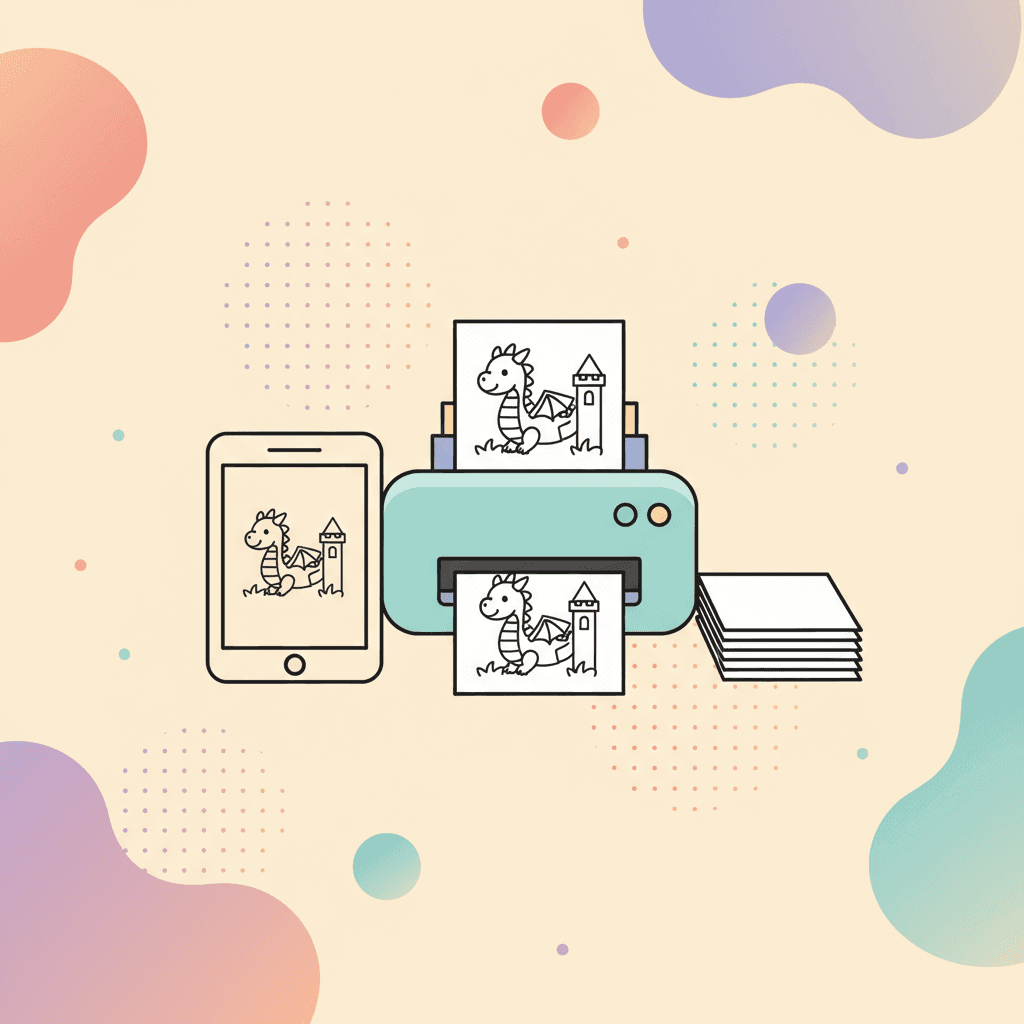
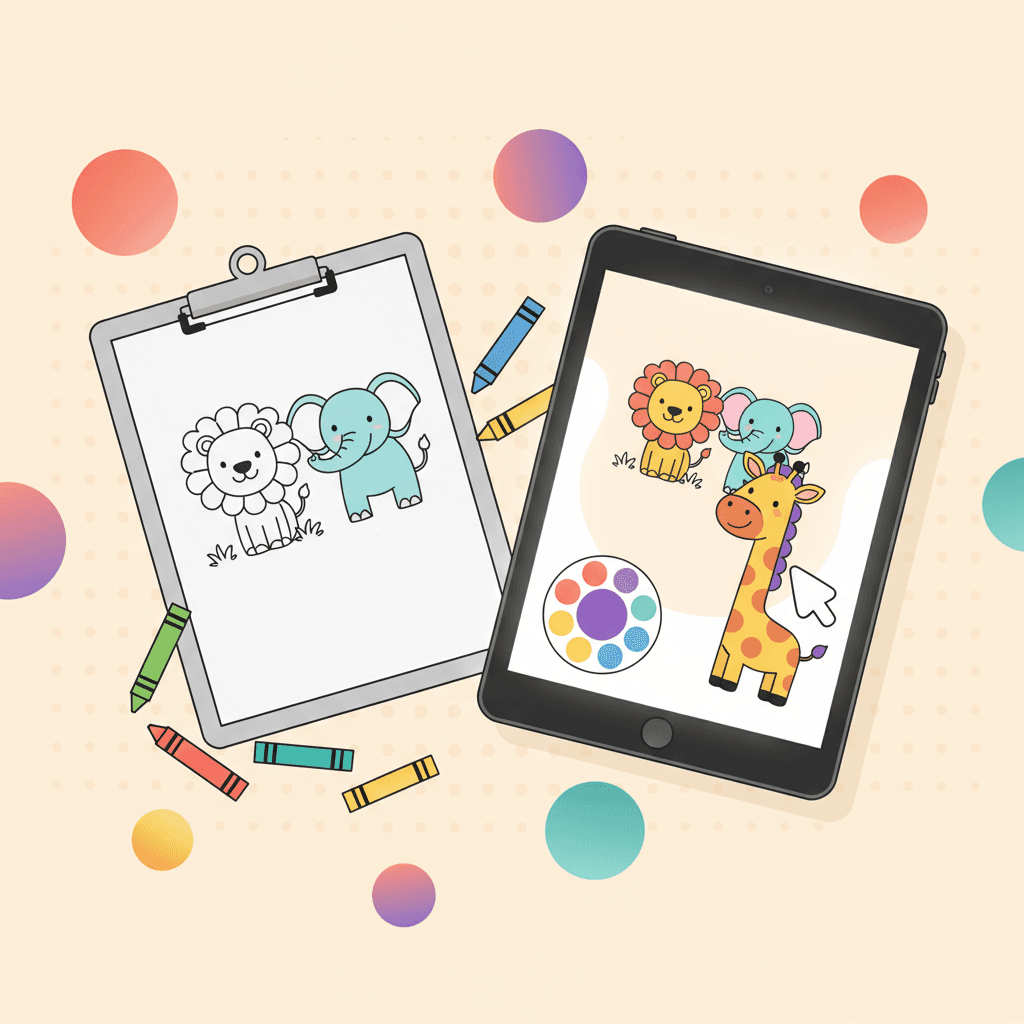
Print works well when you want kids to share supplies and sit together. Digital works well when you want no mess and a clean stop.
If you want a quick comparison:
If kids want to keep their work on digital:
A simple classroom center version
This works well as a center because it is predictable.
Center setup:
- one page bin (easy pages and medium pages)
- one prompt card (5 to 10 prompts)
- a timer (optional)
Rules:
- pick one page
- pick one prompt
- color quietly for 10 minutes
- turn the page in the tray
If you want a full station setup:
A fast way to start at home
If you want to try this tonight, keep it simple:
- pick one category
- pick one page with repeated objects
- give one prompt
Then stop while it still feels fun.
Start with one page and one prompt
Choose one category, pick a page with repeated objects, and start with one prompt. You can always add more prompts later.
Start here: