Making coloring pages is literally our job. Every page in our free library was drawn, tested, and reprinted until the lines behaved. So when people ask us how to make a coloring book, we have opinions, and most of them come from mistakes: lines too thin to survive printing, regions that trap markers, pages that looked great on screen and turned to gray mush on paper.
This guide covers the whole path, from making the pages to choosing size and page count, what printing actually costs, and your options for publishing and selling. It works whether you're making a birthday gift for one kid or a book you want to sell.
The short version
Draw or assemble 24 to 50 black-and-white line drawings, set them up as single-sided 8.5" x 11" pages at 300 DPI, add a cover, and either print-and-bind it yourself (nearly free) or upload it to a print-on-demand service like Amazon KDP or Lulu (a few dollars per copy, no upfront inventory). The drawing is the hard part. Everything else is formatting.
Step 1: Decide who the book is for
Every real decision downstream depends on the audience. Line weight, detail level, page count, all of it.
- Toddlers and preschoolers: very thick lines (4 to 6 pt), one big subject per page, almost no background. What counts as "easy" at this age is stricter than most people think. We wrote about it in our toddler pages guide.
- School-age kids: medium lines, full scenes, moderate detail.
- Adults: finer lines and repeating patterns are fine, but the current bestselling style is actually the opposite: thick-lined, simple "bold and easy" books. We covered that trend in our bold and easy coloring pages explainer.
Pick one audience per book. Mixed-audience books satisfy nobody, and reviewers on Amazon are brutal about it.
Step 2: Create the line art
Three honest routes:
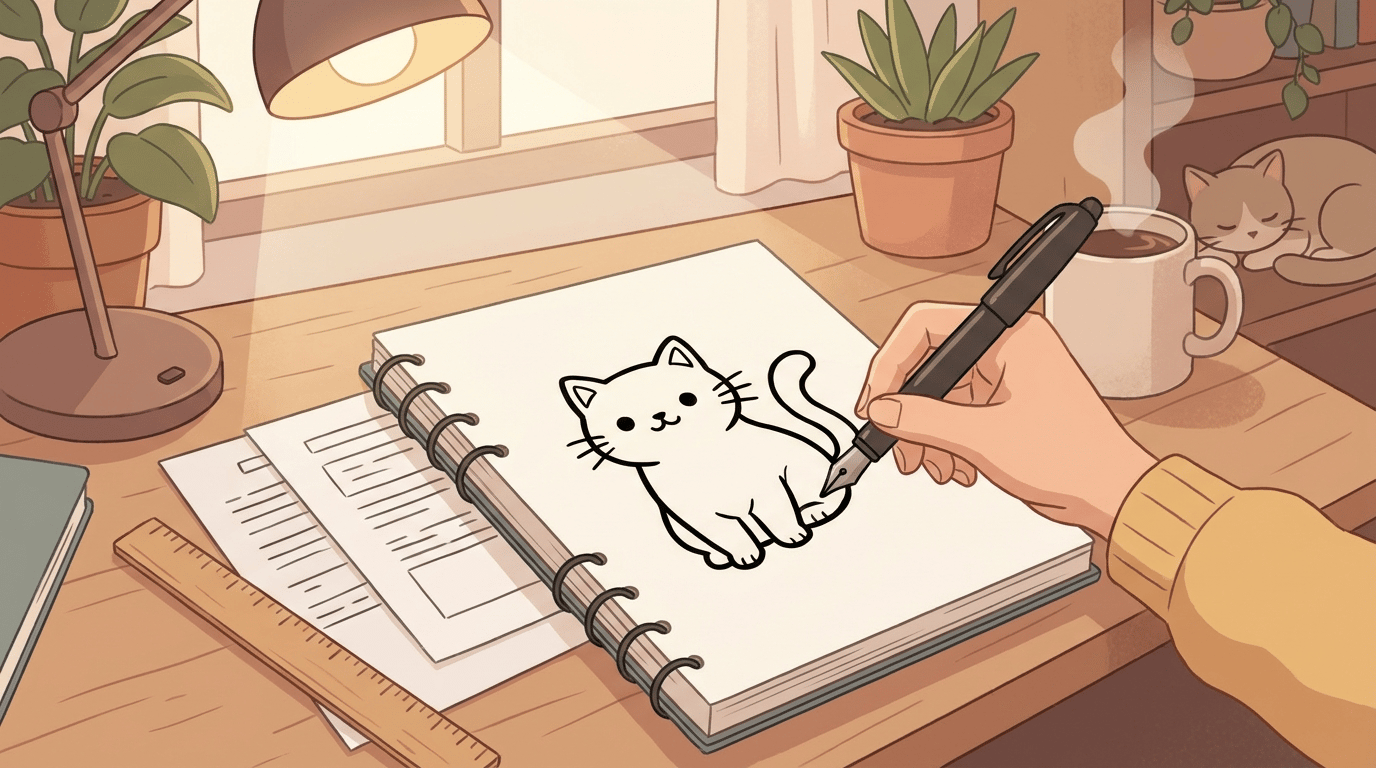
Draw it yourself. Ink on paper, scanned at 300 DPI, or digital in Procreate, Krita, or Illustrator. Draw at the final print size or larger. Shrinking art thickens lines nicely; enlarging it exposes every wobble.
Use tools like Canva. Canva has coloring book templates and a big library of line elements you can compose into pages. Fine for a family project. For a commercial book, check each element's license first. This walkthrough is a good start:
Assemble existing pages. For personal use, you can print pages you have permission to use and bind them. Our DIY coloring book from printables guide covers exactly this, and our own pages are free for it (see licensing for what's allowed). Don't sell other people's pages. Ever. That includes "AI-generated in the style of" a living artist, which is currently flooding Amazon and getting entire accounts banned.
What makes a page actually colorable
The five rules we test every one of our own pages against (our full quality checklist is public):
- Closed regions. Every shape should seal. Gaps make flood-fill tools leak in digital coloring and frustrate perfectionist kids on paper.
- Consistent line weight. One main weight, maybe a thicker outer outline. Mixed weights read as messy.
- No region smaller than a pencil tip. If a colored pencil can't fill it, it's decoration, not a region.
- Pure black on pure white. Grays print as dithered speckle.
- Print a test page. Screens lie about line weight. Every page we ship gets printed on a cheap home inkjet first, because that's what your buyers own.
Step 3: How many pages should a coloring book have?
Most coloring books have 24 to 50 drawings, printed single-sided. Single-sided is the industry norm because markers bleed through, and nobody wants their finished piece ruined by the next page's outline showing through (here's why bleed-through happens).
Practical numbers:
| Book type | Typical designs | Total interior pages (single-sided) |
|---|---|---|
| Kids' book | 24-40 | 48-80 |
| Adult book | 30-50 | 60-100 |
| Sampler / gift | 10-20 | 20-40 |
Two constraints to know. Amazon KDP requires a minimum of 24 interior pages for any paperback, and books over roughly 100 interior pages start costing noticeably more to print, which eats your margin. The sweet spot for a first book is around 35 designs, 70 interior pages.
Step 4: What size is a coloring book?
8.5" x 11" (US Letter) is the standard. It matches what people expect from a coloring book, gives regions room to breathe, and is a supported trim size on every print-on-demand platform. The common alternatives:
- 8" x 10": slightly more bookish on a shelf; everything else about it behaves like 8.5 x 11.
- 6" x 9": works for travel-size or "purse" coloring books, but detail must shrink with it.
- Square (8.5" x 8.5"): popular for toddler books and Instagram-friendly covers.
Whatever size you pick, set up 0.125" bleed on all sides if your art touches the page edge, and keep line work at least 0.375" from the trim edge so nothing important gets guillotined.
Step 5: How much does it cost to print a coloring book?
Depends entirely on the route.
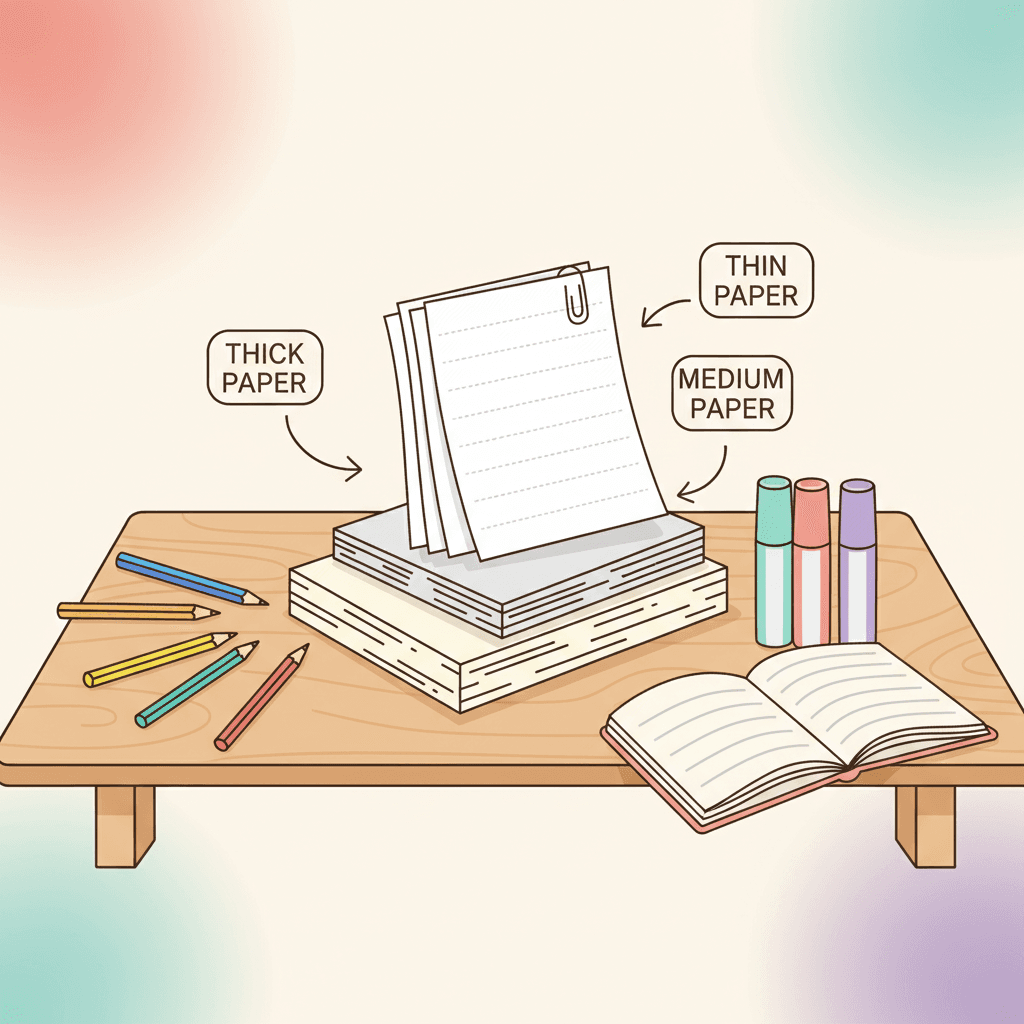
At home: basically ink and paper. Figure $2 to $4 in consumables for a 40-page single-sided book on decent paper, plus binding (a $3 report cover, spiral binding at a copy shop for about $5, or a long-reach stapler). Paper choice matters more than printer choice, and our paper guide has the specific weights that stop bleed-through.
Print-on-demand (KDP, Lulu): black-ink interior books in the 24-to-108-page range print for roughly $2.50 to $4 per copy at 8.5" x 11", and you pay nothing upfront. The cost comes out of each sale. Both KDP and Lulu publish printing-cost calculators, so run your exact page count before you set a price. A $9.99 book with a $3.20 print cost and Amazon's 60% royalty rate leaves you about $2.80 per sale.
Short-run printers (Mixam and similar): for 25+ physical copies (school fundraisers, craft fairs, family reunions), offset/digital short runs get the per-copy price down and let you choose exact paper stock, which print-on-demand doesn't.
Step 6: How do you publish a coloring book?
The two realistic paths for a first-timer:
Amazon KDP. Upload two PDFs (interior and cover) and the book is on Amazon in about 72 hours with zero inventory. You'll need the interior sized to your trim with bleed, a cover built to their template, and a title that says what's inside. "Bold and Easy Garden Scenes: 40 Simple Coloring Pages for Adults" outsells "My Garden Dreams" every time. No ISBN needed; Amazon assigns one.
Lulu. Same idea, weaker marketplace, better paper options. It sells into non-Amazon channels, and it's the better tool if the goal is copies in your hands rather than passive sales.
Traditional publishing exists for coloring books. Dover, the publisher that invented National Coloring Book Day, built a whole business on them. But it's not where a first book starts.
Honest note on the market: coloring books are one of the most saturated self-publishing niches on Amazon, and the r/selfpublish threads are full of people whose Canva-template books sold zero copies. Books that sell have a specific audience, a consistent style, and covers that state exactly what's inside. Books that don't are "assorted nice pages."
Can you sell individual coloring pages instead?
Yes, and it's a lower-stakes way to test your art. Etsy is the main market: sellers list themed packs of 10 to 30 pages as instant-download PDFs, typically $2 to $6 per pack. No printing, no inventory, and you find out whether strangers will pay for your line art before you commit to a 40-page book.
The same quality rules apply, plus one more: buyers print these at home, so test your pages on a home printer, not just a nice laser. And be careful with trademarked subjects. Generic unicorns are fine; branded characters will get your shop taken down.
FAQ
Do I need to be able to draw?
To sell a book people love, someone needs to draw: you, a hired illustrator, or licensed art with commercial rights. For a personal or family book, tracing photos, composing Canva elements, or binding free printables all work today.
What software do I need?
Minimum viable stack: anything that exports a PDF at 300 DPI. People ship real books from Canva, Procreate plus Pages, Illustrator, even Google Docs with inserted images. The tool matters far less than closed regions and consistent line weight.
How long does it take?
The formatting takes a weekend. The drawing takes as long as 30 to 50 good drawings take, and for most people that's the several-weeks part nobody's YouTube thumbnail mentions.
What royalty will I actually make on Amazon?
At a typical $8.99 to $12.99 price for a 60-to-100-page book, expect roughly $2 to $5 per sale after printing costs. Run your real numbers in KDP's calculator before choosing a price.
Can I use Coloring Dojo pages in a book I sell?
No. Our pages are free for personal, classroom, and other non-commercial uses, but not for resale or inclusion in products. The licensing page spells out both sides. For a gift book you're not selling, print away.
Start with one page, not forty. Draw it, print it, hand it to your target audience, and watch what happens. Then make the next one. And if you want to study pages that already survived thousands of printings, our library is open.