The mane was the problem. Forty tiny scallops, each smaller than a thumbnail, and my four-year-old took one look, said "too hard," and went back to the couch. The picture itself was fine. A unicorn. Big eyes, very much her thing. But the regions were the size of peas, and pea-sized regions lose a preschooler in under a minute, which I know because I've timed it more than once at our kitchen table.
Most preschool coloring pages online fail that test, and I think it's because sites sort by theme and nobody ever asks whether a three-to-five-year-old hand can physically color the thing. So. Two jobs for this post. Free pages that work, and the quick check I run so you can vet any page from anywhere in about thirty seconds.
What makes a page work for ages 3–5
Three checks, in my experience.
- A kid can name it in one glance. Preschoolers commit to pictures they recognize. If the subject needs explaining ("it's a mandala, sweetie"), you've already lost. One centered subject with a clear outline beats a clever busy scene almost every time, at least for most kids.
- Big regions. Fist-grip big. Most three-year-olds hold a crayon in their whole hand, and big closed shapes let that grip succeed while tiny detail regions punish it. That's the pea problem from the unicorn.
- Thick lines. They print clearly, and they make "inside the lines" a fuzzy target instead of a precise one. Near the lines is a win at this age. Celebrate it.
The pages
Everything below prints on regular paper, colors cleanly online, and downloads without email gates or fake buttons. All free for home and classroom use, and the licensing page has the plain-English terms if you want them.
Tap any picture to open it, then print or color.
The animals

Smiling giraffe. One big friendly animal, huge neck and body regions. The closest thing we have to a guaranteed yes.

Cute puppy. Round and simple and readable from across the room.

Penguin with a fish. Two shapes, basically. Great first page for a just-turned-three-year-old.

Bunny and carrots. Two orange decisions and the rest is wide open.

Happy elephant. Everything on this page is big and rounded, ears especially. Gray is optional and usually ignored.

Cow in the meadow. The spots are the sell. Every preschooler I've met colors each one differently, on principle.
Things that go (and one cupcake)

Farm tractor. For the vehicle-obsessed, which at this age is roughly all of them.

Train locomotive. Big wheels, big boiler, one proud smokestack. Train kids know who they are.

Dino family. Friendly dinosaurs, zero teeth-bared drama. The gateway page for the dino phase.

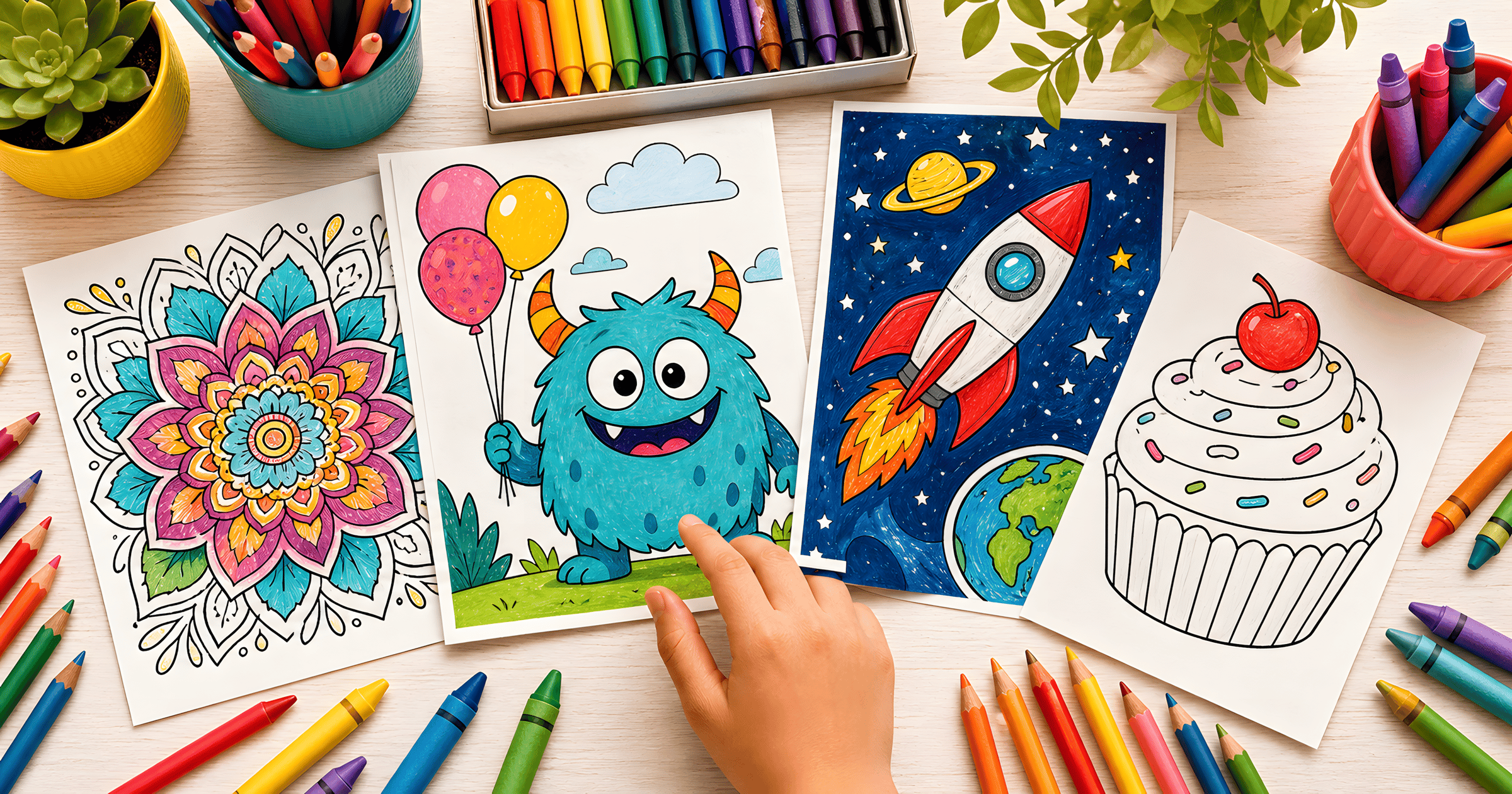
Cupcake with sprinkles. Finishable in one sitting, which feeds the "I did it!" loop that keeps kids coming back.
Big easy shapes

Party balloons. Balloons are circles and circles are kind. Biggest closed regions in our whole library, if that matters to you (it will).

Rainbow and sun. The one page where kids already know the colors going in. Sneaky color-order practice, wide bands, no stress.

Jellyfish dance. Forgives wobbly strokes. Wavy tentacles do that.

Planets parade. Circles again. Space this time.
Want more in this range? The cute category skews simple across the board, and animals, plus farm and vehicles, are what preschoolers request most. Younger sibling in the mix, there's a toddler guide for ages 2–4. The thick-line style has its own writeup in bold and easy pages, and the ladder runs all the way up to coloring pages for teens.
Why bother at this age
It's fine motor training disguised as fun. Steering a crayon and stopping it at a boundary is the same hand control that becomes pencil grip and letter formation in kindergarten, and switching colors counts too. The CDC tracks drawing in its developmental milestones for exactly this reason.
And the grip changes. Around three most kids hold the crayon in a full fist and color from the shoulder and elbow. Through four the fingers migrate toward the tip and the wrist takes over. Five-ish, something like a tripod grip shows up. Every stage is normal, so don't correct a fist grip at three, just hand over pages with regions big enough for fist grip to succeed. Buried lesson while we're here, the same logic applies to paper size, so always print at full page. Shrinking two pages onto one sheet to save paper shrinks every region with it, and you've quietly turned an easy page into a hard one.
This four-minute video from a pediatric occupational therapist shows what "teaching" coloring realistically looks like right now (spoiler, it's mostly setup):
Her setup tips are worth stealing wholesale. Where we part ways: around the two-minute mark she breaks crayons in half to discourage the fist grip and push a tripod grip early. It works, but I wouldn't rush that at three. Chunky crayons and big regions first; save the snapped crayons for closer to five.
One honest note. "Inside the lines" is a kindergarten skill for most kids. If a page comes back as a joyful scribble storm, that's coloring at three. It counts.
Pages vs. worksheets
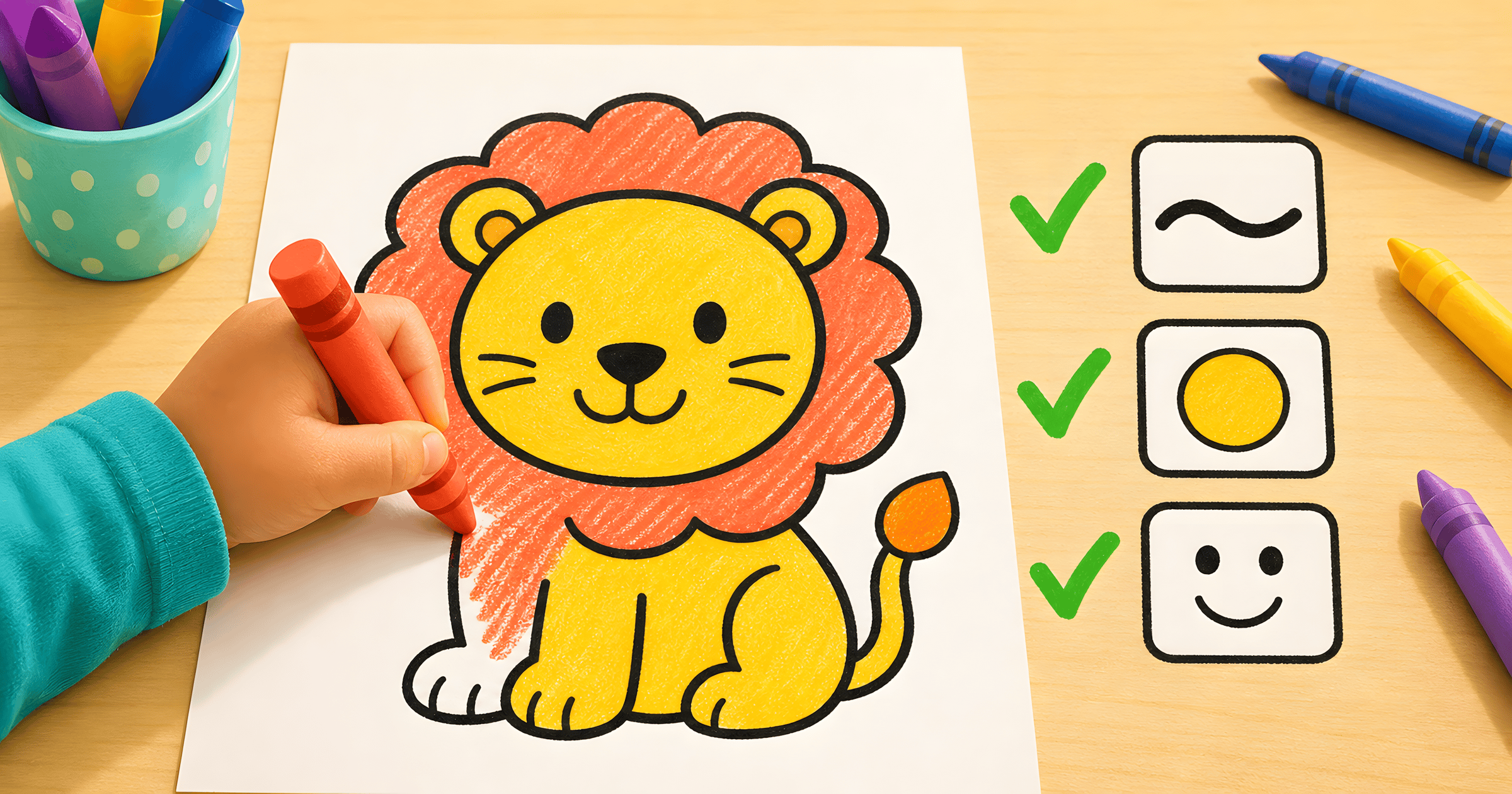
Coloring pages (everything above) are open-ended. Any colors, no wrong answers, best for free play and wind-down time and building crayon stamina. Worksheets add a task, like color the big fish blue or trace then color the letter, and they're really pre-writing practice wearing a coloring costume. Short structured doses. A good preschool week has more pages than worksheets. I've never seen it work the other way around — open-ended coloring is where their hand endurance actually comes from. If you want a little structure without a full worksheet, call out three things to find on the page before the crayons start. The hunt adds focus with zero prep.
In a classroom
The teachers we hear from run coloring as a station, and the setup is is most of the game.
- One theme per week. Ten to twenty sheets in a labeled folder. Decision fatigue is real at four, and a themed stack removes the browsing step entirely. Full system in the classroom coloring station setup.
- Chunky crayons in cups. Cups survive being grabbed, boxes don't, and chunky crayons are just better than regular ones, full stop. (Though the teal one always snaps first. No idea why.)
- A finish tray, because preschoolers need the ritual of done.
- Print extra. Two pages per kid per session plus spares. The restart rate at this age is high.. and a fresh page costs a cent.
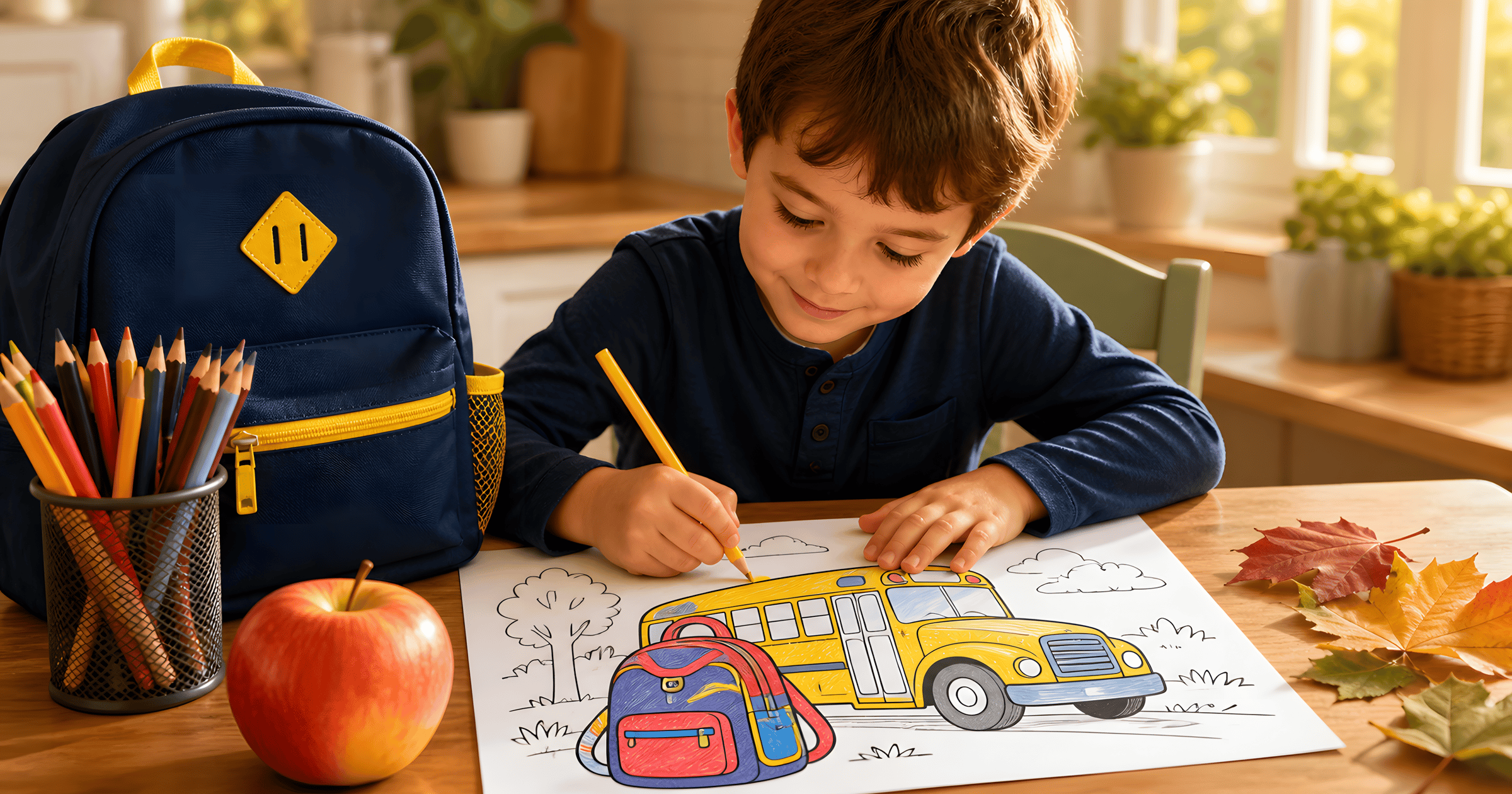
Leaving plans for a sub? A themed stack plus the September pages will carry a stranger at the desk through a whole morning. And for the year they age out of all this, kindergarten coloring activities picks up where preschool leaves off.
Print the giraffe at full size. Put out three chunky crayons. Don't mention the lines. Forty seconds in, you'll know.